
Have you ever worried about how a single accident might hike up your car insurance rates? Accident Forgiveness Insurance Coverage could be the safety net you need.
This special feature helps protect you from premium increases after your first at-fault accident. Imagine the relief of knowing your insurance costs won’t skyrocket just because of one mistake. Whether you’re a cautious driver or someone who’s had a little bad luck on the road, understanding how accident forgiveness works can save you money and stress.
Keep reading to discover how this coverage works, who qualifies, and why it might be a smart addition to your auto insurance policy.
What Accident Forgiveness Covers
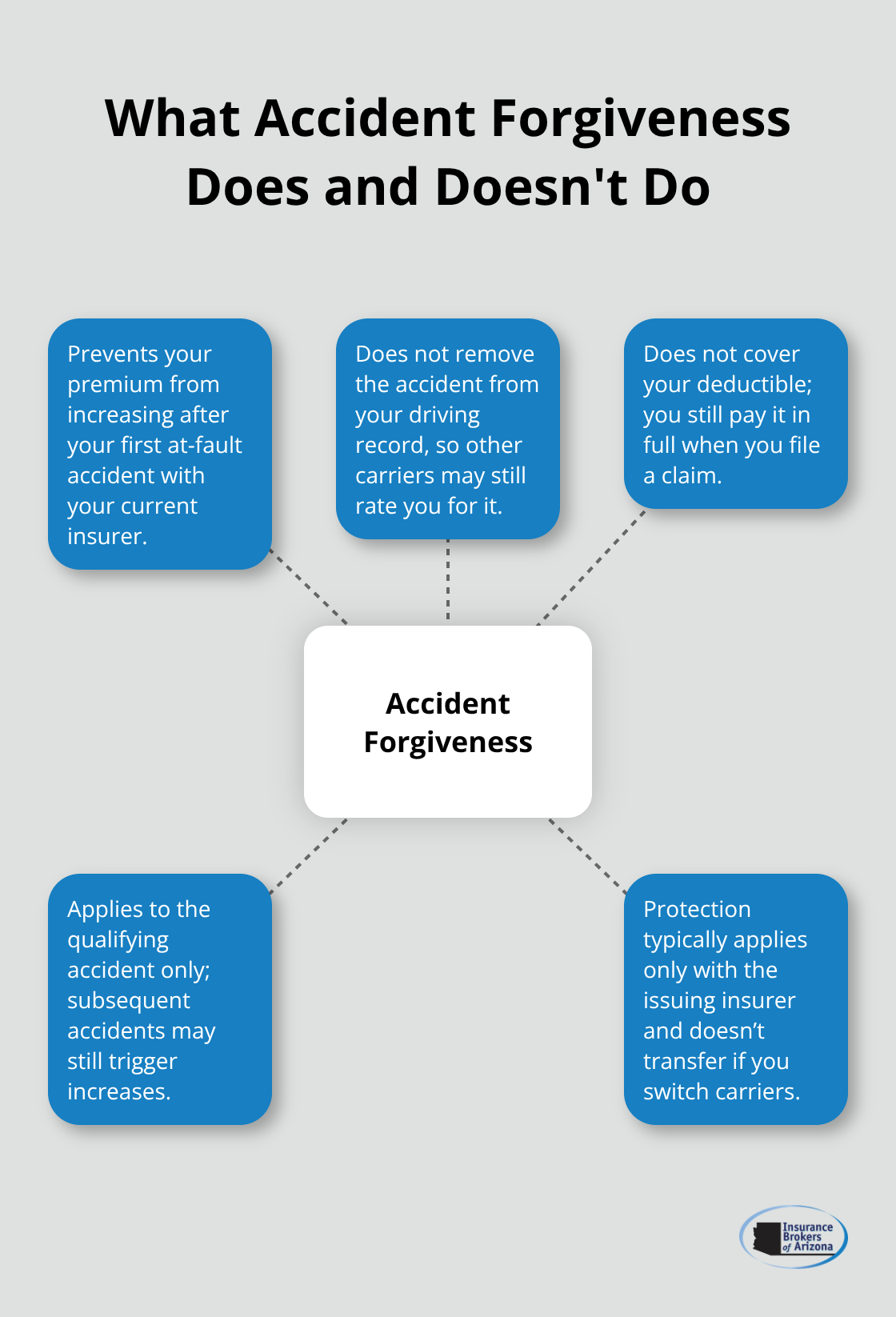
Accident forgiveness means your insurance rates do not rise after your first accident. It usually applies to one accident per policy period. This protection helps drivers avoid higher premiums despite being at fault.
Coverage depends on the insurer’s specific rules. Some require a clean driving record before offering forgiveness. Others may apply it automatically after a certain time of coverage. Limits and conditions vary widely.
| Aspect | Details |
|---|---|
| Protection After First Accident | Rates stay the same after your first accident with forgiveness. |
| Coverage Limits | Usually applies once per policy period; some require clean history. |
| Conditions | Rules differ by insurer, such as length of prior coverage. |
| How Insurers Apply It | Some add it automatically; others offer it as an add-on. |

Who Qualifies For Accident Forgiveness
Accident forgiveness helps drivers avoid higher insurance rates after one accident. Eligibility often depends on a clean driving record. Some insurers require no accidents or claims for a set period, usually three to five years.
Policy requirements vary. Most companies want you to have held insurance with them for some time. Some policies include accident forgiveness automatically, while others require an extra fee.
Typically, accident forgiveness can be used only once per policy period. This means only one accident will be forgiven before rates might increase. Check with your insurer to see how often you can use this benefit.
Benefits Of Accident Forgiveness
Premium stability means your insurance cost stays steady after an accident. It helps you avoid sudden increases in your monthly payments. This keeps your budget easier to manage. Financial peace of mind comes from knowing one accident won’t raise your rates. It reduces stress and helps you focus on recovery. Avoiding rate hikes means you won’t pay more just because of one mistake. Your insurance stays fair and affordable. Accident forgiveness can save you money and keep your insurance steady over time.
Comparing Top Insurers’ Accident Forgiveness
Accident forgiveness helps drivers avoid rate hikes after a crash. Each insurer offers unique terms and limits.
| Insurer | Accident Forgiveness Details |
|---|---|
| Allstate | Rates won’t increase after your first at-fault accident. |
| Geico | Forgives one accident per policy period, keeping premiums steady. |
| Progressive | Prevents rate hikes for your first qualifying accident. |
| Liberty Mutual | Offers forgiveness on your first accident with no rate increase. |
| Travelers | No premium rise after your first qualifying accident. |
| American Family Insurance | Forgives one accident to protect your insurance costs. |
How To Add Accident Forgiveness To Your Policy
Requesting accident forgiveness coverage usually requires a call to your insurance company. Some insurers offer it as an optional add-on, while others may include it automatically after a certain period of safe driving. Confirm your eligibility and ask about any specific rules that apply.
Cost considerations vary by insurer and state. Adding accident forgiveness often means a small increase in your premium. Weigh this cost against the benefit of avoiding a rate hike after your first accident. Some policies may charge a one-time fee, while others include it in the regular premium.
Policy adjustments might be necessary to activate accident forgiveness. Your insurer may require you to maintain a clean driving record for a certain time before applying forgiveness. It is important to review your policy documents to understand any terms and conditions related to this coverage.
Limitations And Exclusions
Accident forgiveness insurance does not cover all accident types. Certain incidents, like those caused by drunk driving or illegal activities, are often excluded. Some policies exclude accidents on off-road vehicles or commercial use.
Most accident forgiveness plans apply to only one accident per policy period. If multiple accidents occur, only the first may be forgiven. Subsequent accidents could lead to rate increases or policy changes.
Policy renewal can affect accident forgiveness benefits. Some insurers require a clean driving record to keep forgiveness. Missing renewal deadlines or switching policies might cause loss of forgiveness privileges.
Tips To Maximize Accident Forgiveness Benefits
Drive safely every time. Obey speed limits and avoid distractions. Use seat belts and follow traffic rules. Staying alert helps prevent accidents and keeps your accident forgiveness benefits intact.
Keep a detailed record of your driving history. Note all accidents, claims, and communications with your insurer. Good records help when you ask for accident forgiveness or renew your policy.
Read your insurance policy carefully. Know the terms and conditions about accident forgiveness. Understand how many accidents are covered and what qualifies for forgiveness. This knowledge helps you use the benefits wisely.
Frequently Asked Questions
What Is Accident Forgiveness Insurance Coverage?
Accident forgiveness insurance coverage prevents your rates from increasing after your first at-fault car accident. It offers financial protection and peace of mind.
Is Appendicitis Covered Under Accident Insurance?
Accident insurance typically does not cover appendicitis. It usually covers injuries from accidents, not illnesses like appendicitis.
Who Is Eligible For Accident Forgiveness?
Accident forgiveness eligibility varies by insurer but typically requires a clean driving record and continuous coverage for a set period.
How Many Times Can You Use Accident Forgiveness?
Accident forgiveness typically applies once per policy period. It prevents a rate increase after your first eligible accident within that time. Check your insurer’s specific terms for exact details.
Conclusion
Accident forgiveness insurance coverage helps protect your rates after an accident. It offers peace of mind by preventing premium increases. Many insurers allow one forgiven accident per policy period. This coverage suits drivers wanting to avoid higher costs after a first accident.
Knowing your options can help you choose the right policy. Protect your wallet and stay confident on the road. Consider accident forgiveness as a smart part of your insurance plan.
Read More
- Insurance Claim Repair Process: Simplify and Speed Up Your Recovery
- Full Coverage Car Insurance Premiums: Save Big with Expert Tips
- Diminished Value Claim Calculator: Maximize Your Car’s Worth Today
- Electric Truck Ownership Costs: Hidden Savings You Can’t Ignore
- Hybrid Sedan Reliability Ratings: Top Picks for Lasting Performance
- Teen Driver Safety Technology: Essential Tools for Protecting Teens
- Plug in Hybrid Review Guide: Ultimate Insights for Smart Buyers
- Auto Insurance Deductible Savings: Maximize Your Money Today
- Usage Based Auto Insurance Rates: Save Big with Smart Driving Choices
- Blind Spot Monitoring Benefits: Enhance Safety and Drive Confidently